Monday, February 27, 2012

Civics lesson: where we live reflects who we are

•••

We went out for pizza last week with a couple of friends. The conversation was lively and it made me realize how much I miss passionate discussion here.

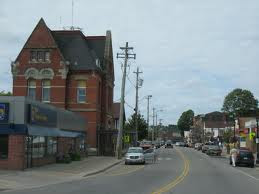
One of our topics was the neighbouring town, St. Stephen, which has a very distinct culture. As residents there know, one of the biggest challenges they face is revitalizing their downtown. So they’ve decided to locate their new civic centre (rink, pool and meeting area) in the downtown core. But there’s still public argument, not only about the choice of location, but also about its affordability.

As the town’s development manager for a while, I was a part of the initial idea, so I have some opinions that matter. At first there was no civic centre agenda. There was only a plan to enlarge the Border Arena. That plan landed on my desk and I asked two questions: 1) is that the best place for an arena? And 2) have you ever considered a civic centre? The answers were unclear, so the town manager, mayor (Bob Brown) and I took it to the people.

It was not an empty exercise. There were no foregone conclusions, no magic plans, no fancy drawings of new buildings. Nor was it aimed at 10 or 20 people. The first meeting attracted over 200 people and we talked not just about an arena-civic centre but the future of the town itself. People were concerned. And perhaps the most powerful presentation was a slide show of photographs showing the town in 1960 and comparing that to what it looks like today. The change over 50 years was shocking. Where solid brick storefronts once stood, large parking lots now sit empty. Where once there were streets densely packed with shops and pedestrians there are now just cars speeding by. So what happened?

St. Stephen, like most other towns and cities across North America has been demolished for the automobile, or to be more exact, for box stores and parking lots. An entire pedestrian culture has been erased and lives on only in museum-piece communities such as the nearby town of St. Andrews.

Much of the new development over the last half-century has been suburban, fueled by cheap gas. For a town like St. Stephen that’s added another negative dimension: the loss of property tax dollars as citizens and businesses migrate out of town, leaving town administrators short of cash. And that shortage breeds another reaction: in-town development at any cost. To raise tax dollars, town planners and politicians, desperate for cash, allow developers to put up anything that fills an empty space. So in St. Stephen we see town management sell off a beautiful little waterfront park that was donated to the town to accommodate a giant vinyl clad retirement apartment complex. To say that this is an aesthetic travesty is an understatement.

As to the civic centre, the people, not the town administrators, decided to go for it. But that’s where it began to fall off the rails. A small group of people took control with a mission to use the new civic centre to rebuild the downtown area. From the beginning the site selection process was skewed to that mission.

While a civic centre is a great asset to attract new businesses to the region, it is essentially another box store, albeit one designed for recreation. As such it requires lots of parking space and encourages an “in-out” user pattern, where people drive in to use the complex and get back in their cars and drive home. Studies of other communities would verify this, had the time been taken. The QPlex, a wonderful suburban facility in Quispamsis, is a good example.

What downtown areas need, as pioneer urban advocate Jane Jacobs pointed out, is a high density of small shops and diverse activity. Building a downtown is more like building a culture than building structures. St. Stephen has already tried the big box approach to revitalizing its downtown. It has a reconverted chocolate factory (now a Service New Brunswick office) and a big main-street post office, as well as a tourist information centre and a chocolate museum, none of which has created the hoped-for downtown renaissance. Nor will the new civic centre.

The only visionary development that I have seen here that relates a blossoming of downtown culture is Diane Ganong’s new Bistro restaurant. Now all it needs is to add a dozen more, and to find the customers to support them (no easy task in a depressed, ugly town).

There’s no stopping the civic centre now. Or undoing the loss of the small park. Or replacing lost downtown buildings. So, what can be done? Two simple ideas: invoke a strict heritage building design code and stop the use of vinyl and aluminum cladding immediately. And no more destroying old buildings.

What about development? It’s been over seven years since I was there. Expand the town limits now. You need the tax dollars. And the town is sitting on the busiest border crossing in Atlantic Canada. Big secret development word of the day: transportation. It’s time to get the lead out, folks.

Monday, February 20, 2012

Two Canadian solitudes: not ethnicity or race

•••

We are a Métis nation. At least that’s what John Ralston Saul tells us in his recent book, A Fair Country. But what exactly does he mean? And how does that apply to parts of the country that have very few Métis or Aboriginal residents, such as here?

Saul digs into Canadian history to uncover our political and cultural roots. Unlike the United States, which exterminated most of its indigenous population to found a European-style republic, Canada was built on a different foundation: a cooperative between the original peoples and the new arrivals from Europe. At first a practical business arrangement, it became much more.

Canada was harsh and survival required the skills of the Aboriginals. Canada’s original business, the fur trade, was only possible because of the local Natives and the cooperative-adaptive skills of the British and French newcomers, who were few in number. In short, they needed their Aboriginal partners.

Over a period of decades, the newcomers married into the Aboriginal clans, forming deeper alliances that would lead to the resettling of Canada, and the formation of a new country.

Saul goes to great pains to describe the social and cultural impact of this alliance, and it’s lasting effects on our political and justice systems, and indeed even on immigration. He describes this as “the widening of the circle,” an inclusiveness among Canadians that has naturally evolved thanks to our early integration with the First Nations.

This, of course, has not been a particularly smooth process, especially for Canada’s Native population, which still has grievous issues around land claims and social repatriation. But Saul’s point is clear. We would not, and cannot, be who we are without including the three pillars of our social contract: English, French and Aboriginal. Saul also points to the influence of the fourth pillar and beneficiary of the original alliance, the arrival of immigrants from around the world and their effect on Canadian culture.

All of these conclusions are reasonably predictable. But Saul also put his finger on something else that touched a nerve: that there has always been a divided approach to governance in this country. On the one hand is the “widening circle” approach. On the other is the Old World, elite, ruling-class approach identified with the Family Compact/Chateau Clique. And these two forces have been in tension, or even in competition, since our beginnings as a modern nation.

The more egalitarian widening circle group preferred legal language that stressed the well-being and welfare of the people. The more conservative elite group preferred the word “order” as in peace, order and good governance. In the early days, more often than not, the phrase “peace, welfare, and good governance was the operative stance, as the egalitarians gained control.

Nowhere can this been seen more clearly than in the words of our first (and mostly unknown) pre-Confederation prime minister, Louis-Hippolyte LaFontaine, who in 1841 wrote: “The principles of a people are stronger than the laws imposed upon them. No privileged caste, beyond and above the mass of the people, can exist in Canada.”

This is radical language. It set the stage for what was to be an ongoing Canadian struggle for a true democracy. And for the most part it has succeeded.

The counterbalance to this new democratic impulse was the United Empire Loyalist population, which held to the authority of the Crown and the British Empire. And those connections would bring us fully into the First World War and consequently into the Second. The Loyalists were the foundation for our first ruling elites. But that Empire is long gone.

So where are we at today? Well, there’s a new empire in the world, it spreads along our southern border, and it’s becoming increasingly authoritarian. Coincidentally, there has been a rising tide of elitism and fundamental authoritarianism spreading across Canada over the past three decades. One might call it a new conservative movement. And it seems to be very much in parallel with our old conservative Loyalist culture with its affinity to Queen and Empire—with a dangerous additive: a deep attachment to corporatism.

Corporatism knows no borders, and those who serve it serve a different master: capital. Today our federal government is stifling open communication with our environmental scientists. It’s curbing protest on the pacific pipeline and discrediting dissenters by accusing them of being puppets of foreign interests. It’s working to legalize unrestricted Internet spying. It’s adding prisons and increasing punishment. And it’s pretending to run government as a business while increasing spending on policing and armed forces while slashing the social safety net. In short, this faction of Canadian politics is moving us dramatically into lockstep with the new American corporate empire.

The hallmark of this shift is a renewed focus on authority, which favours the elite and their servants. It does not support free-thinking, flexible egalitarianism.

Is this the country we want to become? Or should we follow LaFontaine’s lead and begin to put our principles above our current crop of leaders? I for one would like to see a fairer country, not an ever more punishing one.

For more insight you can read Robert Altemeyer's online book detailing the authoritarian follower. Interesting research and a good read.

Tuesday, February 14, 2012

A Valentine for the big hotel on the hill

•••

That big hotel on the hill can be a tourist town’s best friend. And so it’s been with the Algonquin Hotel in St. Andrews by-the-Sea. When the Fairmont chain pulled out last fall, a pall fell over the community. What would become of the town if its hotel failed to open?

This concern, of course, is predicated on whether you think tourism is a sustainable industry, which in a fossil fuel-scarce future it may not be. But for now tourism keeps many economies vibrant, from Jaipur to Jamaica*. Even so, depending on tourism as the only source of income makes for a fragile economy.

Fortunately for the tiny seaside community where I live, someone, make that several someones seem to be ready to rescue our grand old hotel. With a letter of intent in the hands of the current owner (the Province of New Brunswick), the potential new owners are Southwest Properties, New Castle Hotels & Resorts and the famous Marriott hotel chain. And we’ll know in 45 days whether the deal will move ahead.

What about the companies? The Marriott is easy; it’s a world-class brand. And coincidentally, the Marriott already brands a very famous Algonquin Hotel in the heart of Manhattan. I wrote “brands” rather than “owns”, because the Marriott chain, like many other large hotel chains, doesn’t own properties.

The actual owner of that other Algonquin is HEI Hotels & Resorts, a company based in Norwalk, Connecticut, which owns and operates over 30 luxury hotels for brands such as Hilton, Sheraton, Westin, Embassy Suites, and yes, Marriott. Did I just write that HEI “operates” these properties? Yes.

So what does the Marriott do? It manages the marketing and branding standards for hotels. The actual ownership and operating of the properties is done by companies such as HEI and others.

Two of these others are Southwest Properties and New Castle. Southwest is based in Halifax. New Castle is based in Shelton, Connecticut, coincidentally just 30 kilometers away from HEI’s headquarters. Together Southwest and New Castle have already built and now operate the Marriott hotel in Moncton, so they have a running start at hotel development in the province.

From what I can gather New Castle is the operations outfit, the one that hires staff and manages the day-to-day operations. Southwest is the property development company, the one that handles the renovations and maintenance of the physical plant.

If this seems to be a rather complicated business arrangement, it is. But there are benefits, at least to the companies. First, the hotel can be sold to new owners without affecting the main brand, in this case the Marriott. Second, each company can specialize and grow in its own area of expertise without having to invest in other, unrelated aspects of growth. Third, all companies can share the profits and reduce the liabilities by distributing the risks and responsibilities. Lawsuits, for example, might be more difficult with three companies involved rather than just one. Finally, the companies each have less exposure to the vagaries of local environments such as politics or public opinion.

Is this a good thing? On the local front I’d have to say that this seems to be a wonderful development for St. Andrews and its economy. With a renewed hotel and the power of the Marriott brand marketing it, the town’s tourism should be on an upswing. That means more visitors, more new businesses and a brighter local real estate market for years to come, barring an economic downturn.

There might even be some new development opportunities around the old hotel, a new indoor pool perhaps, or a portion of the hotel converted to condos, or even a waterfront townhouse development on the golf course. Time will tell.

But it’s the complexity thing that gives me pause. Not for the Algonquin development, but for the slightly disturbing notion of complexity as a growing feature of modern organizations. As it happens I just encountered a thinker exploring just such a thing. His name is Joseph Tainter, the author of The Collapse of Complex Societies written way back in 1988.

Tainter, an anthropologist and historian, theorizes that societies solve problems by developing complex solutions. As societies themselves become complex, they use more resources and energy to less effect, and reap diminishing returns. As everything becomes evermore complicated resources eventually become depleted, systems stagnate, decision-making becomes more cumbersome and even innovation slows to a trickle. Sound familiar?

Finally complex societies are faced with only three choices: a) successfully create even more complicated solutions, b) simplify or c) collapse. Of the three Tainter believes simplifying is the most difficult but ultimately the most successful approach.

I don’t exactly know how our old hotel on the hill could simplify its operations. The days of single individuals buying and operating hotels seem to be long gone. It will either collapse as a business or operate under a more complex system, hopefully successfully.

Today this is the best Valentine gift this town or this region is likely to get.

*Jamaica, almost entirely dependent on tourism for its economic health, has enduring poverty and one of the highest homicide rates in the world.

Monday, February 6, 2012

New Brunswick, my favourite fish and chip joint

•••

Our forests are under attack again, I see. Or more accurately, New Brunswick’s toilet paper industry has fallen under the watchdog eye of CBC’s Marketplace. Their question: what do the eco-logos on the toilet paper packages actually mean?

To find out, Marketplace rounded up the usual suspects: a member of the Irving family, several forest management types and the head of one of the ego-logo branding outfits. They all met in somewhere in one of the province’s “managed” forests, which is essentially a farm of maturing spruce trees. The company foresters point to the forest as a model of success, the critics argue that it is an ecological tragedy, an industrial monoculture destroying our original mixed forest.

According to the Falls Brook ecological centre, the government of New Brunswick now subsidizes the forest companies to the tune of $11.12 per cubic meter of harvested wood, which amounts to an annual gift of $76 million from us, the taxpayers, to the private corporations. So, we’re all into a public-private sector partnership when it comes to harvesting our forests for wood chips.

And then there’s the other New Brunswick chip business, which depends on another agricultural monoculture: potatoes. Most of the province’s intensive farming is done on the upper reaches of the Saint John River. According to Agriculture Canada “the area of lowest soil cover in New Brunswick occurs in the potato region,” which the report identifies as “negative.”

Since 1981 there’s been a 79 percent decline in organic matter in soils across about 70 percent of our agricultural lands, which indicates that the general health of the soil is in serious decline.

Also since 1981 there’s been a dramatic increase in the contamination of our fresh water by the nitrogen in fertilizers. The amount of land in the high-risk category has gone from 2 percent to 96 percent. As to other contaminants, the report is a bit evasive about pesticides in the water, but notes that areas of low risk are shrinking while areas of high risk are expanding. Translation: New Brunswick farmers are using a lot more pesticides than their predecessors did 30 years ago.

So, like our forestry, our agriculture is increasingly dependent on the large-scale industrial model.

What about another side of our economic table on the fish plate?

Recent figures put New Brunswick’s fish and seafood exports at about $795 million. Combined with the domestic market, the total production is nearly $1 billion a year. The entire seafood industry provides jobs for more than 12,000 New Brunswickers, primarily in harvesting and seafood processing, and indirectly supports thousands more in transportation, manufacturing and other industries.

And yes, both traditional fishing and aquaculture are industrial-scale activities that can often have profound consequences on the eco-system. Over-fishing and other human activities have resulted in the collapse of some fin-fish stocks such as cod. And aquaculture methods, including the choice of species, salmon, have had their ecological impacts on the health of the oceans.

It’s important to note with all of these resource activities that only 5 percent or less is actually consumed by New Brunswickers. The remaining 95 percent is exported either to the rest of Canada or abroad. In short, all of these activities are tied to global markets, so New Brunswick’s economy (not to mention its ecosystem) is only as sustainable as the global industrial model itself. And that, pardon the pun, is food for thought.

And there’s the emerging aspect of this story: the shale gas development in the southeastern corner of the province. Natural gas fracking is a highly controversial industrial mining method, and if you don’t believe it, check out the Academy Award-nominated American documentary, “Gasland,” which will give you some idea of the horrors befalling the people who live near these operations. Have you even seen your household tapwater on fire? That kind of thing.

Our current provincial government seems to be in a backpedalling defensive mode when it comes to fracking. Their website shows an increasing focus on raising the regulatory bar on natural gas development and a commitment to “managing” the industry. On the positive side, there is gas in that there shale. On the negative side there’s a very high risk of severe environmental damage from the fracking process to the water tables in the region, very few local jobs created, and extremely low provincial revenues relative to the impacts, for example just $600,000 in royalties in 2010. But thanks to the Emera pipeline, our fracked gas will have an easy route to US markets.

All of this makes my head hurt. It all comes down to slowly, or sometimes rapidly, strip-mining our provincial natural resources for export. In return we get a lot of jobs, which are only as good as last week’s paycheques, as we’ve seen from recent mill shutdowns, and some bargain-basement royalties paid by the companies.

Tell me this isn’t our model for future sustainable development, is it? And if it isn’t, what is?