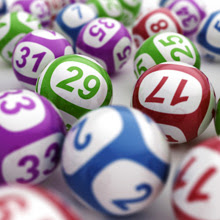
While I was visiting family in Ontario a few weeks ago I heard that a couple had won $50 million on the Ontario Lotto Max. That’s a lot of money. I remember thinking, what would I do with $50 million? That kind of cash can buy a lot of dreams. And I suppose that’s why lotteries are so seductive.
I don’t buy lottery tickets. It’s complicated. I don’t think I deserve money for nothing. Personally, I don’t get any thrill playing the lottery. I’m pretty sure the odds aren’t in my favour. And I don’t think my government should be in the lottery business—which is simply a voluntary tax on the poor.But lotteries are big businesses for governments. So, you might ask, why did our governments get into the gambling business? Well, how about…because they were running short on cash. Since the 1970s governments around the world were lowering income tax rates for upper income earners, cutting back on estate and capital gains taxes (also to the benefit of the wealthy) and slashing corporate taxes (again for the wealthy), so the money had to come from somewhere.
And that somewhere was from us. Luxury taxes hit booze and cigarettes. HST hit pretty much everything we bought. There’s tax on gasoline. Import duties. Licensing taxes. Land and property taxes. All in all, the average middle-income Canadian family pays out 43.9 percent of its total earnings in taxes.
But even at that rate, it’s still not enough to support our government spending (what with all those tax claw-backs for the rich) on, say, new prisons, fighter jets and warships. So what about gambling? It’s fun. There’s always a big winner to get the suckers, er, players excited. And it literally prints cash for the government. Hell, even the conservative Fraser Institute supports it! Here’s a quote from their online paper, “Gambling with Our Future?”
“Those who participate in gambling activities do so voluntarily and, in return, receive intrinsic benefits from their consumption. If consumers are gambling for entertainment purposes, they are purchasing gambling just as they would purchase cinema or symphony tickets.”
What a humanitarian view. Except that the house is always rigged and the suckers, er, citizens always lose. And lotteries are a growth industry, expanding profits by an unhealthy 15 percent a year.
Meanwhile, the wealthy have no desire to play the lottery. They have money of their own. So they “voluntarily” don’t play. Instead, they invest what they’ve gained from their lower tax rates in other things. Such as off-shore bank accounts. Or investments that earn them even more money as “capital gains” which are, of course, taxed at a much lower rate than ordinary workers’ paycheques. Or charitable foundations.
A charitable foundation is the gift that keeps on giving. It gives the founding donor an income tax exemption for the organization (thus protecting the initial gift), and it gives the organization tax deductions for contributions to the organization (usually benefiting the contributing donor and family).
There are other benefits. The donor (not the government through taxes), gets to choose which social projects will get funding. The donor can also influence recipients in any number of ways, which at its basest level provides free PR for the donor family name. But this influence can also deliver political influence as well as community respect. And I haven’t touched on corporations that get into the philanthropic game, which coincidentally tends to be good for their bottom lines.
Big deal, so what? Well, ‘so what’ is important. Both lottery corporations and philanthropic organizations turn the rest of us into beggars. For example, of the individual grants given out by charitable corporations more than 80 percent are less than $5000, this in a multi-billion dollar philanthropic industry in Canada. That’s a whole lot of scrambling for scraps off the tables of the wealthy.
There are the big donations, too, of course, that are sought by swarms of professional fundraisers. Unsurprisingly, disproportionate numbers of big grants go to big name organizations in Canadian urban centres, especially Ontario, while regions like Atlantic Canada only account for 1.1 percent of total gifts. Perhaps things like hospitals, research centres and theatres in big cities bring more cache to their donors.
This is not to say that lotteries and philanthropies don’t to good work. But at the end of the day the best we could say is they’re a distortion of the social contract. Rather than building a progressive tax system that works to redistribute wealth from the top to the bottom, and to keep generational wealth to acceptable levels, we’ve allowed wealthy dynasties to re-jig our democratic financial system to their benefit.
There is any number of targets to blame, from wealthy lawyers who become politicians to corporate lobbying and old boy networks to maintain a system in which the rich get richer.
But the real blame is ours. If we keep allowing ourselves to be treated like suckers, that’s what we’ll be. The first step is boycotting the government lottery system. The second is electing politicians who aren’t intimidated by the wealthy or afraid to tax their money. Good luck on both counts, I say.