Monday, October 31, 2011

The trouble with stagnating economies

•••

There’s an old saying in the newspaper business: “If it bleeds it leads.” So, true to form, I asked myself, what’s currently bleeding in Charlotte County? And in asking, I wondered if I’m also compelled to offer solutions? It’s a sticky business.

Any bleeding starts with the economy and I’d have to assess the southwestern New Brunswick economy as stagnant.

Looking at the Fundy isles, the population of Campobello has dropped over the past two decades from 1400 down to just over 1000 people today. That and the fact that the island can’t sustain a bank branch are sure signs of trouble, and declines in both tourism and fisheries explain it. Since 9/11 tourist traffic from the U.S. has slowed, and the island is on the front edge of that trend. And fisheries have been in decline for more than half a century.

Grand Manan suffers also from the same issues. However, it has a productive lobster and seaweed sector that pretty much keeps its economy in a holding pattern.

Deer Island and the coastal communities have aquaculture, which has become a financial mainstay, along with the herring and lobster fisheries, the latter doing quite well.

Up north in neighbouring York County, McAdam is only half the size it once was, and has an unemployment rate 50 percent higher than the provincial average. A bright light is the renovation of the train station, which may bring a few additional tourist dollars to town, and the upgrading of the rail line. But that’s hardly enough to re-energize a town that’s lost its purpose.

St. Stephen is the largest town in the region and its commercial hub servicing the 26,000 or so people living in the area. It supports supermarkets and government offices, but its homegrown retail sector is barely limping along, unable to compete with the Wal-Mart across the river in the States. But what makes the town an economic centre is its manufacturing sector: the Ganong and Flakeboard plants.

Ganong is more than holding its own, taking up slack left by other candy plants closing in Canada and investing $10 million in new technology and adding 40 new staff positions. Even so, it’s forced to keep a tight rein on operating costs, which translates into periodic layoffs.

Flakeboard is doing well, too. Over the past few years it’s expanded from one plant in St. Stephen to seven facilities across the continent. It’s now a major producer of composite board with an annual production capacity measured in billions of square feet. That’s great for the company but not necessarily for the town, as the local plant is no longer the only tool in the Flakeboard kit. Rumours have it that there are “voluntary layoffs” in the works for November.

And finally there’s St. Andrews. The Fairmont hotel management chain is pulling out of the Algonquin Hotel at the end of the year, which leads one to believe that the province itself will be operating the facility next year, and to say that the town’s largest attraction is well past its prime is an understatement. By popular reckoning overnight tourism dollars are down, too. The college is also in a holding pattern, struggling to fill empty seats. The town's Department of Fisheries and Oceans biological station is in a reduction pattern, not replacing retiring scientists as an ongoing part of federal belt-tightening. And the Town itself is dependent on philanthropy, which accounts for 10 percent of its annual budget, which can’t be healthy.

Why should what happens here matter to people living anywhere else? Because we are a microcosm of what’s happening internationally. More people today are reliant on jobs in consolidating industries and in centralizing governments, which means that local self-reliance is a thing of the past. So Charlotte County is now a post-development, post-frontier economy. As with most of North America, but particularly with the American Industrial Northeast, the sense of expansion has disappeared, having long ago migrated offshore to Asia and elsewhere, where development opportunities are cheaper.

What can be done? Offering solutions can be tricky, like predicting the future. It’s a question of reimagining the region in the context of not only today’s world, but tomorrow’s as well. And that reimagining process requires the collaboration of the brightest minds in the region (and from beyond the region) as well as the commitment of the local power brokers, who need to welcome newcomers and share some of their power. That collaboration requires creating a region-wide development forum in which the reimagining and openness to new ideas could take place.

I would say that in my experience openness, collaboration and accommodation is a weak point here, as is the ability to reimagine the region as a whole. The county continues operating as a collection of competing interests and communities. Real risk-taking and vision seems antithetical.

The quick fix, of course, is adding more government money to build new infrastructure, highways, museums, business parks, arenas, etc. The better fix is investing public money to create a “smart” fund that can provide seed money and a forum for new enterprise that focuses on re-localizing the economy (much as aquaculture did 30 years ago).

The last thing any of us needs at the moment is more stale, in-the-box thinking.

Monday, October 24, 2011

Shucking oysters or a steady state economy?

•••

We went out to dinner with friends this weekend. We had a wonderful evening, but… I’d ordered a dish with jumbo prawns, which, I realized after the first bite, had gone off. I managed to spit it out without embarrassment and the waitress replaced the prawns. But the damage was done; I couldn’t eat.

Somehow, this was a metaphor for things I’d been thinking about: the power of our individual vote, the events in the Middle East, and sustainable economies, all of which have the smell of decay.

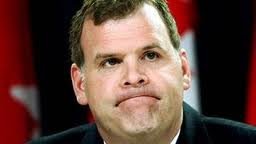
Let’s start with the Middle East. I read that John Baird, our Minister of Foreign Affairs, recently headed a junket to Libya with a planeload of Canadian business people, including representatives from Suncor, the oil and gas company, SNC-Lavelin, the giant engineering company, and Pure Technologies, a pipeline company. All three of these companies had already been doing work in Libya for Gaddafi. Now that he’s been conveniently dispatched, it’s back to business, with the Canadian government pledging $10 million to get rid of hand-held weaponry in order to “demilitarize” and “democratize” the country.

Noble sentiments. But what’s really going on is clear. Canada and the rest of its NATO allies are using military force to crack open these dictatorships in Iraq, Libya, Somalia, Yemen, etc. (that just happen to be close to the valuable resources we want), then allowing our corporations to scoop the vitals out of the shell, in effect oyster shucking someone else’s resources.

It’s no coincidence that Gaddafi, from 1969 to 1988, was recognized by Libyans as a hero who reformed the banking system, provided education for his people, spent on building a social safety net for his people and nationalized the country’s oil and freshwater aquifer reserves—and that this closed, socialist system wasn’t exactly embraced by the international business community, which wanted easy access to Libya’s resources.

From 1988 onward, there was considerable outside pressure to “liberalize” Libya to allow more private sector involvement, and that’s when Gaddafi began to go off the rails. Corruption and greed entered the Libyan development equation, and Gaddafi’s socialist dream spiraled out of control. By 2004, Gaddafi was behaving like a paranoid schizophrenic, alternately conspiring against the U.S. while groveling into submission, even offering to have one of his sons marry Chelsea Clinton. With Obama’s quasi-legal invasion of Libya the oyster was cracked. And now the shucking begins.

In more U.S.-complaint regimes, such as the Saudi Arabian royal dictatorship, none of this is necessary. The shells were opened long ago and the extraction continues unabated.

So if large corporations are able to use friendly governments to pry open access to new resources, what are they doing at home? Noam Chomsky, the famous linguist and political activist, writes convincingly that democracy is dead in the United States. Elections, he says, are bought and paid for by corporate interests, and cites a century of legislation favouring corporations—and working against the general population—as evidence. Barack Obama, for example, will be spending over $1 billion dollars, mostly corporate money, to get reelected in 2012. It’s no accident that Obama’s closest financial advisers were the same people who engineered the financial collapse of 2008 and whose former companies benefited the most from the government bailouts while millions of Americans lost their homes.

Canada is rapidly following America down the corporate rabbit hole. Political discourse is being dumbed down into PR-managed sound bites. Emerging Harper government policies focus on the reduction public freedoms (such as surveillance of all Internet correspondence), increased spending on crime control and punishment, increased militarization, scaling back on foreign aid and environmental protection, and the reduction of taxes and regulations on large corporations, especially in the finance and energy sectors.

In other words, our government is working more for the globalist corporate agenda and less for ordinary Canadians. And the former Liberal government had been moving in the same direction.

I think we all have choices regarding the world around us. We can turn on the flatscreen and watch ‘Battle of the Blades’ or some other diversion, we can blindly follow our governments and argue that they know what’s best, or we can actually try to understand the problems so we can at least respond in an open-minded and intelligent way.

The battle for real democracy is breaking the corporate-state alliance, much as our forebears fought to break the church-state alliance. Capitalism is not democracy. Capitalism successfully functions in totalitarian states such as China, and we’re well on the way toward becoming a totalitarian capitalist, corporate-controlled state here.

With so many environmental issues facing us, we need to move away from the runaway “growth” economic model toward the creation of a “steady-state” economy that moves away from profits, conspicuous consumption and the race for personal wealth and status. We need to focus on social equality, sustainability and energy-transition technologies.

We’ve seen these same solutions discussed since the 1960s only to witness our society move, astonishingly and dramatically, in reverse.

Meanwhile, and ironically, Atlantic Canada will be benefitting from the 30-year, $25 billion warship-building contract for the federal government. Frankly, that money would be far better spent on developing alterative energy than preparing to send our kids off to war.

Monday, October 17, 2011

Powerful thoughts on the long drive home

•••

We loaded the kids into the car this weekend and headed off to Fredericton to check out the Occupy New Brunswick demonstration. It was a great opportunity, we thought, to show the kids some live history in the making, without having to drive to New York.

Along the way I mentally reviewed a few ideas for this week’s column. My editor had suggested writing about Question 2 on the upcoming Maine ballot. Apparently, the government down there is floating the idea of building a horse track and slot machine “racino” in Washington County. I was leaning toward writing about the Occupy movement in New Brunswick.

It turns out that Frank McKenna is the New Brunswick connection. Frank, our former premier, is now the chair of an outfit called Brookfield Asset Management, which just happens to own Zuccotti Park in New York City, where the Occupy Wall Street protesters are camping out. Coincidentally, NYC Mayor Michael Bloomberg and Brookfield planned to clear out the park for “cleaning” that Saturday. But, reacting to a storm of complaints about the plan, they decided to call it off.

It’s not hard to conclude that both Bloomberg and McKenna represent the top 0.1 percent income group. Bloomberg spent literally millions to for the privilege of becoming the mayor of the Big Apple. But what about McKenna?

Well, in addition to being the chair of the $120 billion Brookfield outfit, Frank is currently the deputy chair of TD Bank Financial and is a director of both the CD Howe Institute, the famous Canadian business think-tank, and Canadian Natural Resources Limited. In addition to having been Canada’s ambassador to the U.S. he also sat on the boards of GM Canada, Xstrata (formerly Falconbridge–Noranda mining), FNX Mining Company, Major Drilling Group International, Acier Leroux (steel), AMEX Americas (engineering, including mining), UPS, Shoppers Drug Mart Corp., and CanWest Global Communications. He also was a director of the infamous Carlyle Group, the Bush family–affiliated investment company that was representing the bin Laden family prior to the 9/11 attack.

So Frank seems to be heavily associated with international high finance and natural resources, but that’s not such bad thing. Or is it?

I checked out some of the recent CD Howe’s publications. One on bankcard legislation caught my attention. The first point of focus of the paper was “on removing existing regulatory and governance structures that may be impeding innovation and competition before considering adopting new ones.” And the last point stated that “any [government] interventions should be minimal, clearly defined and limited, and ensure that all its recommendations not impose specific market structures, allocations of cost, decision-making processes or other organizational constraints on complex and evolving payment networks, but rather allow network operators and the markets in which they operate to determine these.”

In case you didn’t get it, that’s code for minimizing government oversight on “complex” electronic payment networks—which is exactly the type of thing that has led to the recent financial collapse. In other words, the CD Howe outfit, which has some influence on shaping government decisions, seems to be promoting a “hands off new finance” government policy.

Meanwhile, Frank’s other current interest, the innocuously named Canadian Natural Resources self-described as “one of the largest independent crude oil and natural gas producers in the world,” is an energy company with big interests in the western Canadian oil sands, which also happens to be one of the world’s dirtiest megaprojects. Of course the oil sands project is directly linked to the controversial Keystone pipelines which will run from Alberta to the Texas gulf, and which, if completed as planned, would supply over 1 million barrels of oil to the U.S. a day—fully 5 percent of its total petroleum consumption.

It’s no understatement to say that these projects are of great strategic importance to the top 0.1 percent of the population that has a financial interest in such ventures.

So how does that connect to the rest of us? Well, it doesn’t really, other than we’re the end customers. Oh, and that guys like Frank have undue influence on government decision-making, which tends to drive even more profits—and power—into the hands of the few. Which is, coincidentally, what the Occupy movement is all about.

And how did this New Brunswick connection link to the Occupy New Brunswick event? Not at all, as far as I could tell. The event, when we finally found it, was more like a concert in the park with loud music, a few generic placards and a handful of built-on-site cardboard tents.

And what about the proposed racino just south of the border? It’s just another ill-conceived attempt to raise government money by voluntarily taxing the poor through legalizing gambling. Billed as boons to tourism, these ventures have been social and economic disasters in other “have-not” regions such as northern Ontario. But it’s a great strategy if the idea is to shift government fundraising from taxing the wealthy to addicting the poor to gambling and false hope.

One wonders how things got this far out of whack. We might ask Frank. Better yet, we might ask ourselves how we allowed so much of our government to be handed over to private corporate interests.

Monday, October 10, 2011

Relax Wall Street. Youth don't care as much.

•••

Last week Steve Jobs died, my son’s rabbit ran off and one of his former teachers passed away. I handled these events with a somewhat philosophic approach. Jobs was a remarkable man but I’d never met him. I figured the rabbit might come back. And then there was my son’s teacher.

I remember her calling to ask if our son would like a last-minute part in a play, and then her coming over to the house to run lines with him to fast-track getting him ready. That made an impression. Clearly, this teacher was extraordinary.

She’d been suffering with cancer. I watched my brother and several friends die of cancer. It was painful process, as it must have been for our son’s teacher, and my heart goes out to anyone who goes through that, including Steve jobs and his family.

There’s been a lot written about Steve Jobs. One could summarize the guy who made cool computers—and made computers cool—as a man of vision, passion and courage.

Our son’s teacher was a woman of vision, passion and courage, too. She was a passionate pianist, singer and leader, which was obvious to anyone seeing her directing a school concert. Now she’s gone.

It deeply affected our son. After hearing the news he called home, “feeling sick” he said. I understood. I picked him up and he took the afternoon off school. We talked a bit about it. But did I care less? Do we care less as we age?

Well, there’s research that suggests we empathize more as we age. In studies older people register sadness more easily than young adults. Still, there’s not much research available on empathy in children—other than a mention that babies seem to have some form of emerging empathy. As important as empathy is, we don’t know a lot about it.

There are signs that empathy is directly linked to social conditioning. And there is new evidence that we’re becoming less empathetic as a society. There doesn’t seem to be a single cause, though a there are some ideas. For example, researchers at York University in Toronto learned that people who read less fiction are less empathetic, and we’re all reading less fiction these days. OK, not so good.

From a psychological perspective, the late social philosopher Christopher Lasch concluded that “The new patient lacks the capacity to mourn…the strength of his defences, however, makes him resistant to successful analysis...To be able to enjoy life in a process of involving a growing identification with other people's happiness and achievements is tragically beyond [his] capacity...”

He is talking about narcissism and its dramatic rise in modern society, in which image is more important than substance, and wherein self-image becomes more important than self—and certainly more important than “the other,” that is: anybody outside of ourselves.

I would argue that the old are just as susceptible to this spiraling into self-absorbed narcissism as the young. And I would use the Occupy Wall Street protest as an example. The question is often asked by the media establishment, “why exactly are these people protesting and what are their specific demands?” Simply put, what they’re protesting is the narcissistic greed of the top income class of society. And I would have to say that these financial elites are not exactly teenagers. Most of them are middle-aged or older, old even. And the majority of the protesters, who seem to care a lot by the way, are young. So what’s going on?

While older people might feel “sad” about seeing people suffer, and while those feelings of sadness may become stronger as we age, we also lose the passion of youth as we age. When young people care, they care in a passionate, risk-taking and active way, a way that has force. And that scares a lot older people, who value safety and protection over passion and confrontation, however sad they may feel.

This holds true in my own empirical experience. Florida, with its large cohort of old people, is full of road rage and grumpiness—a place typically populated by seniors who are apathetic about political change—unless it affects their fixed incomes. They vote to protect the status quo, in which they are highly invested. Not exactly your Occupy Wall Street rebels.

But if, as the research shows, levels of actual empathy are declining across our society, we’re in trouble. Then it becomes every man and woman for him- and herself, and may the most exploitive transnational corporation and most manipulative media disinformation channel win. And that’s exactly what we’ve just been living through over the last 30 years. Until the financial credit bubble burst.

Now young people are awake and taking to the streets. Adbusters magazine in Vancouver got the original Occupy movement started. Now there’s even an Occupy New Brunswick organization with its next demonstration planned for Fredericton on October 15.

All I can say is thank God we have youth who are less worn down and cynical than we are. Empathy without energy doesn’t amount to much—beyond merely feeling sad.

Monday, October 3, 2011

Marshall McLuhan, fat, the revolution and us

•••

There was that bag of chips I’d stashed away from the kids, just in front of the macrobiotic cookbook (oops). I reached up and grabbed a handful—and had that familiar flash image about getting fat.

Why did I go for the chips? Simple. It’s comfort food: carbs and fat are jammed into an instant food fix. Neurobiologists tell us that it’s like doing drugs. When we’re bored or anxious or depressed, we eat. It’s cheaper and safer than shooting up.

New Brunswick is the third most obese province in Canada. Almost 30 percent of the people in our province are obese, and almost 65 percent of us are overweight.

Coincidentally, those big facts loom large in the book I’m reading; it's The Spirit Level by Richard Wilkinson and Kate Pickett. They’re two British scientists who’ve statistically connected income inequality to all kinds of social ills, including obesity. The wider the gap between the rich and the poor in any given region, they’ve found, the more unhealthy the society.

The authors point to key social factors linked to income inequality:

• levels of trust
• mental illness and addiction
• life expectancy and infant mortality
• obesity
• children's educational performance
• teen births
• homicides
• imprisonment rates, and
• social mobility.

The U.S. is, in general terms, the wealthiest nation on earth. But the income gap between the rich and the poor is dramatic and widening. There are more billionaires living in the States than anywhere else, and the U.S. spends by far the most amount per capita on health care, yet the average American dies 4 years sooner than the average Japanese. Why? According to the authors’ research, Japan’s average wealthy CEO is only four times richer than the average worker. In the America the gap is more than 300 times greater. And at the other end of the scale, the United States has a greater number of its citizens—the vast majority of whom are poor—in prison per capita than any other country, developed or not.

On the opportunity and equality scale, New Brunswick isn’t doing so well, either. It has an unemployment rate running over 10 percent, and a seasonal unemployment rate in some regions can push well over 30 percent. Over the past year New Brunswick lost 6500 jobs. At the same time over 13 percent of the total workforce works for the provincial government and the province is currently looking to cut costs—and jobs. These unemployed people are bored, eat more junk food, do more drugs, get sicker and become more worried and depressed than their working cousins.

And on the other private ownership side, two (2) families in the province have a combined net worth of around $13 billion. By comparison, the average New Brunswicker’s net worth is a little over $100,000. McCain Foods alone accounts for $6 billion in revenues annually, which is approaching the size of the provincial government. These two companies and a handful of others have an extraordinary influence, not only on the provincial economy, but on its social dynamics.

Working in a tough economy controlled by a few key players, New Brunswickers have fewer available opportunities. So they’re loyal. They stay in the same jobs longer than any other Canadians and work cheaper. At the same time, like all of us, they compare their own circumstances to the affluence of the corporate owners. And the comparison makes them unhappy. If the theory holds true, Saint Johners, with their close proximity to the wealthy and powerful Irving family, would be less happy than their urban neighbours in Moncton two hours away, who have no dominant billionaire clan and experience a narrower gap between the haves and the have-nots. The socio-economic structure affects personal self-image.

Self-image, it turns out is extremely important. Humans, as Wilkinson and Pickett point out, are highly social—and comparative—creatures. In their discussion about equality they talk about “social evaluation,” that is, individuals and groups comparing themselves to others.

We’re taught by advertising and the corporate media to feed this comparison. We’re sold on luxury goods and exclusivity. And if we can’t afford these things we feel shame, as if we are personally responsible, though most often we’re not. Much of the great wealth we see around us is an accident of birth. Driven by our hunger to consume and bombarded by over-choice, we begin to care less about the people around us.

Wilkinson and Pickett observe that this materialist pathology leads to a fixation on image over substance (brand value over actual worth) that in turn leads to widespread narcissism, anxiety, depression, poor health and even suicide. Status becomes more important than health.

Ostracizing the poor (by stripping them of status and pride) in this kind of society becomes a powerful tool of control. Those who don’t maintain the proper image are subtly shunned. We become anxious to avoid it. So social-commercial conformity, under the guise of individualism and individual choice, becomes the norm. We learn to recognize the best stuff, and buy it, transferring its brand characteristics to ourselves. We don’t hire the fat secretaries, no matter how much better they may be at doing the work. We overtly teach our kids the game of “tops and bottoms” and quietly turn them into dominant tops. Then, ironically, we try to advertise bullying away. And we become skilled at judging by first impressions. One look is often enough tell us whether a person has any power or not.

When it comes to image Canadian professor Marshall McLuhan famously posed “the medium is the message,” in other words, the form shapes the content. So the image of power translates into actual power.

All governments are in power to protect citizens. Military forces are built and maintained and complex systems of administration are constructed to administer the law. However, the operative word—the hidden medium—in all of this process is “no.” The form of all government is therefore based on the power of “no,” the power to restrict action.

Corporations, on the other hand, are all about getting customers to “yes.” But what happens when these two forms merge? What happens when a corporate–government alliance takes place, as is happening in the U.S. and elsewhere, in which corporate influence directly shapes government policy, as we saw with the bailout of the American financial system a few years ago?

In the evolution of this kind of hybrid system, corporations get to short-circuit the “no” and get an instant-on “yes” to their plans, while the rest of us are controlled by the same old “no” structure. But in fact it’s worse than that, because now corporations can begin to impose their own controlling “no” on the public to protect their corporate interests. And that marriage of capitalism and government is simply called fascism. The medium now becomes the message: the message being the rise of repression and growing inequality.

That’s exactly what ordinary people the world over have figured out in the continuing aftermath of the global financial meltdown and the “war on terror.” They see their rights eroding, their jobs evaporating, government leaders in bed with the corporations and they’re taking to the streets. The revolution is beginning. We saw it with the G20 protests in Toronto and the over-zealous policing. We’re seeing it in New York with the ongoing Occupy Wall Street protest.

But we’re unlikely to see it here in New Brunswick. We’ve been trained to our situation for almost a century now. And we’ve proven that if we don’t like it we just leave. But as former New York Times reporter Christopher Hedges recently wrote, it’s time to choose between rebellion and slavery.

Sure it sounds a bit melodramatic. But the times are a’ changin’ again, and fast.

The answer, as Wilkinson and Pickett point out, is getting our governments to focus on creating equality rather than creating top-controlled wealth or bottom-end jobs.

And hell, if they could pull that off, who'd need a revolution?