Monday, April 26, 2010

The King and Queen must die

©

The clutch pedal was already flat to the floor even before I stepped on it. No clutch. So much for moving the last of the furniture with the truck. I climbed down out of the cab, twisted, and pulled out my back. Now no clutch and no back.

The plan had been to move some furniture into a cottage for two WWOOFers who are here to help with our gardens. (WWOOFers are farm labourers who sign up with Willing Workers On Organic Farms and who volunteer to work on organic farms around the world.) We have one from Toronto and one from Frankfurt, Germany. So instead of moving into the cottage, they’ll have to keep bunking on our rec room couch and in one of our kids’ rooms.

We did manage to get the WOOFers over to the old cottage (photo of it in the early days) to help us paint their rooms, but along the way the farm gate swung loose and gouged a deep scratch in the side of our van. This incident interrupted our planned detour to rescue the farm ATV, which had run out of gas on a muddy laneway that almost—but not quite—ate the front wheel of the van as we tried to reach the ATV. I filled the tank, but the ATV battery was dead. Happily, it did start right up after I pulled the cord, which pulled my back out even further.

I’d like to say that these minor events were the only things that clouded my mind that day. Unfortunately, my parents aren’t well. Back in Ontario, my dad (who is 88) is recovering from bypass surgery after several heart attacks, and my mom (80) is on dialysis, her kidneys having failed a couple of years ago. My mom called me the other night complaining that my dad was working himself into an agitated state because he’s not allowed to drive. His doctors are concerned not only about his heart, but his eyesight—he apparently has cataracts as well as some macular degeneration. That’s not good. She’s also worried that his mental acuity is slightly impaired too, maybe from the surgery.

The odds are, as they go, so will I. That’s the subtle beauty of DNA. On the phone my mom asks how I’m doing. “You should be taking sublingual B12, the other stuff is a waste of money,” she tells me, like a Jewish mom. She runs through a list of other vitamins. I pretend to listen but I don’t.

Children with parents who live too long are a bit like Prince Charles. There’s a persistent feeling that, “my parents have sat on the family throne for so long I’m almost too old to become a king.” So how does one become the king of one’s own life if the original king is still around?

Good question. And life is full of coincidental answers. I know two people who are nearly the same age as my parents. Right now they’re both in good health and actively presiding over life, but neither one is exactly ready to move over and let someone else take the lead. And yet it seems to keep them going.

On the other hand I have a nephew and a good friend who both lost their fathers to cancer. They were both 12 years old when it happened, after each of their fathers had been ill for only six months. These two guys had to assume a greater share of responsibility at an early age, and both are pretty self-reliant.

They met when my nephew was visiting us a couple of weeks ago—and found out that they both had a lot in common and shared common interests. It was cool to watch.

Not all of us see ourselves as kings—at least not until we have kids of our own. Most parents wisely move aside to allow their children the space to grow; they are pleased that their kids are doing things that they never had. My grandfather was also a wonderful king who showed me the way, and for years I played the role of rebel king, priding myself on going where they had never gone.

If we spend too long a time playing these roles, we wear them out. The philosopher king, like Pierre Trudeau, eventually loses the sparkle and freshness of new ideas, especially when those new ideas are tested in the real world. The rebel king, like William Wallace the Scottish revolutionary, rarely assumes the throne, and pays that price. And it's not just men. The same is true for women who stay too long in their roles.

The best we can do is to slay our kings and queens before they own us completely. Again and again we have to go out alone into the wilderness to reinvent ourselves, to become the heroes of our own lives. And these ritual slayings, by accepting major changes to our lives, prepare us for the final slaying when we depart this fair rock.

Divorce is one of the few modern rituals of slaying, which may slay both king and queen, along with their young princes and princesses. Business relationships can be killing fields, too.

But there’s a bright side. When we sever relationships—and our attachment to our assigned roles—we’re free to create something brand new. If we have the courage—and if the people around us will let us.

But how do we deal with the external kings and queens who rule our lives?

The idea of kingdoms and hierarchies has been a part of the human condition for a long time—but not throughout all of human history. Kings and kingdoms only came into being after the advent of agriculture. As human activity became specialized, it became easier for certain individuals to gain control over others. Leadership became the ability to coordinate and manage the efforts of a colony of specialists. There’s a lot of literature on this. Inevitably, inexorably, the leadership became hereditary.

For a brief period in modern history, these inherited dynasties were challenged by the people at the bottom of the pyramid. First with the French, then American and most recently the Russian and Chinese revolutions. Royalty was abolished. Later, when the “robber barons” began to over-exploit the citizen-workers, the governments of the day stepped in, albeit with limited success, with anti-trust legislation to break up the monopolies.

Rockefeller, for example, simply carved up Standard Oil and created five smaller corporations over which he retained indirect control. With the rise of the global economy over the past 40 years, we’re witnessing the return of the oligarchs, only this time with the complicit approval of national governments, which are vying to attract and retain global corporations to keep their national GDPs growing.

Clif Droke, a market analyst and blogger on the website Safehaven notes this trend:

“One area that Forbes briefly touched on that actually comes closer to the truth is the “winner take all” phenomenon. This is something that is unique to our generation and something our parents didn't have to deal with. This phenomenon is discussed at length in the modern classic, ‘Winner Take All Society’ written by the economists Robert Frank and Philip Cook. Briefly stated, the winner-take-all economy is characterized by only a relative handful of men and women dominating the highest places in any given economic area, including sports and entertainment, with the top participants commanding huge salaries and leaving everyone else competing for the crumbs. As the authors illustrate, this phenomenon was relatively unknown in our grandparents’ generation and to a lesser degree in our parents’ generation. It has accelerated especially since the 1980s.

“Forbes at least acknowledged this in passing by observing that “people generally judge their fortunes not in absolute terms, but by comparing themselves to others, the super-success of the top 1% can make Mr. And Mrs. Median feel relatively poor.” Forbes cites as an example golfer Tiger Woods making $87 million last year while a top athlete of the 1960s, Joe Namath, made only $142,000 a year in his day. Indeed, the winner-take-all phenomenon of our time only serves to increase feelings of dissatisfaction among the median.

“Along with the winner-take-all phenomenon of our generation comes the corollary of economic fusion. The rich have not only become richer, leaving relatively less for the rest to compete for, but industries have merged and consolidated on a level that was unseen in our parents’ time. In our parents’ and grandparents’ day, “trust busting” was the operative word as the government was urged to break down monopolies where they existed and prevent them from arising and threatening consumers. Today, just the opposite trend is in force. Monopolies and oligopolies are actually encouraged by the government and supported at every turn. This has led to the rise of the super-corporate state with U.S.-based multinational companies such as Wal-Mart dominating entire industries where once competition among hundreds of competitors reigned supreme.”


The difficulty, of course, is that business has gone transnational while governance and oversight has not. Corporations and the few who operate them are able to skip over borders, collecting unprecedented profits along the way. National governments are now a just subset of the corporate profit and control agenda. A new generation of kings and queens are on the rise. They’re a group that can expect 25% to 40% annual returns on their investments, while we mere mortals can only hope for 5%.

In fact, it's becoming increasingly difficult for us to deal with the external kings and queens. And for the most part they are invisible to us. They live in insular worlds protected by lawyers and investment consultants.

The real answer is that this is just another rising tide in the human condition. An impending energy crisis may cause the tide to turn the other way. Or not. But history is full of examples of revolution arising from inequity and deprivation.

Whether external or internal, the king and queen must die—to allow the diversity of the colony to flourish. Ideally, it would be better if we all could become WWOOFers at some point in our lives. As a collective survival strategy, equity may be a better bet than royalty.

Time will tell.

Sunday, April 18, 2010

Sex and the shimmering light in the dark

©

God, as we've been taught to view Him (Her, It...), is a narcissistic projection of ourselves. That God is anthropomorphic and the target of God-challenging atheists such as Richard Dawkins, Christopher Hitchens and company.

In the centre, there's the animating force of the universe, the push that keeps the universe expanding, the gases congealing into planets, the orbs turning...and the trees growing and animals crawling around on this moldy rock—culminating in human consciousness. This is the god of the mythic cosmos, the god of Carl Jung, Joseph Campbell, Thomas Moore and that other bunch.

And on the far right are the believers. Here, dogma, liturgy, ritual and the supreme power of the real, one-and-only God—the only path to eternal salvation, are the unassailable positions of the true faith.

To me the divide between the first two seems narrow. And so does the divide between the second and third. But between the believers and the non-believers there seems to be no common ground.

But if I had to pick a starting point I'd probably begin with Carl Jung. No one crossed mental boundaries better than Jung. Almost single-handedly he defined what it was to be an individual human being. He deconstructed then reconstructed who we are: a central controlling ego driven by a hidden, ancient, self-indulgent id, overshadowed by the harshly critical superego, and below, a vast unexplored unconscious self looming in the dark, unlit underground corridors of each mind.

Jung also recognized a collective unconscious at work, a kind of human shared undercurrent, a deep connecting river from which our individual unconscious selves drink. In other words, Jung "got" the force.

Sometimes, through very close relationships with lovers or friends, we can open our conscious selves to these deep rivers of unconscious feelings, allowing us to share that vast stream together. For a time the ache of being a small entity alone in the universe is soothed.

On the other hand, Jung was spectacularly successful as an international figure. Jung, the professional psychologist, attained recognition and fame. He challenged and then split from Freud, his closest contemporary. He was a man who had achieved a certain power in his profession, a profession that he, along with Freud and Adler, helped to build.

There we are, back to power. God apparently has power, and Jung had power. I'd read a bunch of Jung's stuff a while ago, and for some reason decided to check him out online. And damn, if Jung didn't collect mistresses. Antonio Wolff, "Toni", was his 25-year old patient when they first met. Jung was 38. Toni quickly advanced from patient to student to lover, and became a regular at the Jung household. The relationship almost broke up Jung's marriage to the Emma, the elegant, wealthy industrialist's daughter who financially supported Jung's interests. (Interestingly, Freud interpreted one of Jung's dreams as the "failure of a marriage for money.")

Jung's relationship with Toni lasted until 1930, when she invited a group of university students to visit him for a discussion on alchemy and individuation. Toni disagreed with alchemy; one of the students, 18-year old Marie-Louise von Franz, the daughter of a German baron, did not. Slowly, Marie-Louise replaced Toni as Jung's intellectual confidante, though never becoming his lover. Von Franz turned out to be a brilliant student and extended Jung's thinking into new areas, including the unity of the material and psychological worlds as being one and the same, though manifested in different ways.

Sex and power are the cornerstones of Freudian and Jungian thought. And both Jung and Freud saw the connections between the two, although Freud was more focussed on sex as the primary determinant.

Jung's behaviour with women seems to explain as much about him as his writing does. He was obviously attracted to attractive, wealthy, intelligent and powerful women. He was inclined to collaborate with women more than men, and he was also inclined, as we can see by his treatment of Emma, to dominate his women.

Psychology may be the ultimate rationalization for the struggle against death. Sex and power offer a respite from mortality. But the psychologist knows these are temporary conditions. Without a God to solve the mortality problem, the psychologist must eventually wrestle with the problem in a kind of living death dance.

The psychologist represents a new kind of mythic hero, not an orphan or a wanderer, nor a martyr or a warrior or a magician. The psychologist is a scout. The scout leads where the tribe will soon follow and seeks to push past the limitations of the ego and into the deep darkness of the unconscious where our fears and dreams and, yes, our immortality resides. Along the way, the scout is faced with all the temptations, the animus and the anima, the mother and the father and all the other archetypes and monsters, all of which lead to losing one's mind. And Jung did break down.

But along the journey, the scout passes through the unseen, unimaginable wonders, the gleaming cathedral spires, the celestial art and music, like the seers and prophets of old.

The psychologist-scout returning is not like the prophet returning who immediately begins to concretize the visions, turning the spiritual into the material. Where the prophets returned with commandments and instructions for temple building and ritual, the psychologist returns with rationalization—the chemical interacting with the biological to produce the illusion of mystery. And yet, hidden within the rational interpretation is the faint, flickering hope that there really is a unifying spiritual force, something more powerful, more conjoining, more transformative than 'mere' sex.

The prophets, by concretizing the spirit into ritual were able to do something that the psychologist-scout can only accomplish with great difficulty. The prophets returned with tools to block, wall off and stave off fear and desire. These tools were able to do an extremely good job at directing human output, but ironically these same tools invariably drove the individual away from the spirit and back into the material world, where control was more possible.

As science progresses, even the scouts are becoming fewer in number. Pharmacology now precedes psychology as a science. Oxytocin replaces human desire in the sexual equation.

Yet the euphoria of sex and love, even as it dims with age, is gloriously, spectacularly transcendent. It isn't chemistry that we see glowing around our lovers in the darkness. It's our brief glimpse of immortality.

Monday, April 5, 2010

By the power and authority invested in me

©

There he was, sitting in our living room. Instead of shyly sneaking out, I walked over, stuck out my hand and challenged him. “George?” I asked. He broke into a big smile, got up and shook my hand. That was the first time I met my dad’s boss.

From that point on George and I were on a first name basis. George gave me my first job after graduating. George gave me my first promotion, and put up with pretty much whatever nonsense I dreamed up on that job. I’d learned something about power. To get it—you behave as if you already have it. Even so, I’m still not always able to pull it off.

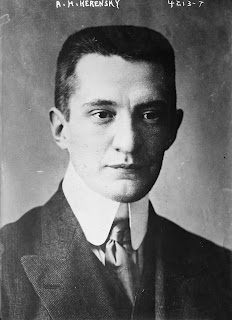
This old revelation of mine reappeared last week when I was reading a bit of history about Tsar Nicholas II during his internment. The new prime minister of Russia, Alexander Kerensky, went to see Nicholas and was apparently awestruck in the Tsar’s presence—even though Nicholas, (who' d already abdicated the throne) was humble, gracious and most congenial. Kerensky was so excited he could barely form his sentences, according to historian Robert Massie.

The effects of power and authority shape us, though power was not such a big deal where I grew up. Of course each of us knew our place. But there was a big, wide-open future ahead of us that was completely and totally egalitarian. We late 20th Century Canadians enjoyed one of the best meritocracies anywhere, and were the peacemakers of the world. Or so we were taught.

Like most deeply held beliefs, this was mostly bullshit. Thinking back to when I was a kid, I can remember who the powerful people were. They were Catholic priests with long skirts, alcohol on their breath, fire and brimstone in their sermons and long black cars (donated by the local Buick or Cadillac dealerships) in their driveways. They were the business owners with those car dealerships. They were the town’s lawyers and accountants. They were the old widows living alone in the stone mansions beside the park. They were the towering cops in navy blue with nightsticks swinging on their hips as they walked the downtown beats. I recognized these people, and I sensed they had something I didn’t have. But I just didn’t put two and two together until I was older. Like every other kid I knew, I had the good sense not to piss any of them off, at least intentionally.

This, of course, didn't always work. When my friends and I were spotted lighting a fire in the back of an abandoned van, the police showed up at my house. The power and authority got very large—making even my parents seem insignificant.

To a large extent, most of the powerful people I met as a kid got it the old fashioned way. They inherited it. Cops had kids who became cops. Lawyers had kids who were lawyers and who later became judges. Rich people always seemed to have rich kids. Then there were the rest of us.

Way back in the 1960s a lot of us deluded kids believed that power was a shared commodity. We were saturated in “power to the people,” “black power,” “grey power,” “the power of love,” and even “flower power,” all of which added up to very little actual power at all. By the 1980s, everyone had realized that the real power was money. Guys like social activist Jerry Rubin went over the wall and became a businessman.

Power comes in two main forms today. Money and fame. They’re not always connected, as in the case of Nadya Suleman, the “octo-mom.” She’s poor and famous. But she’s more famous than you or I, so she owns some kind of power, at least in the popular media, and as long as she can keep doing more and more outrageous stuff.

Neither money nor fame particularly interests me as a source of power. It’s power in its undistilled form that gets my attention. Closer to home, there are people you might call powerful living in our area. But the only one with active power seems to be our local member of parliament. He also happens to be a cabinet minister, which I guess is even more powerful. After being elected for three terms he’s now going to retire. And just as our tiny region is gearing up for a political convention to replace him, along comes Prime Minister Harper’s communications dude, John Williamson, parachuting himself into our local riding, seeking the nomination. John, not content to just be close to power in the Prime Minister’s Office, obviously wants real power. I know this shouldn’t bug me so much, but it does.

Why should some media flack who went to high school close to this riding (Fredericton) and has never lived in this riding get the nod over any number of lifelong residents who could, should and would represent us in Ottawa? It’s rhetorical. We both know why.

In former incarnations Williamson was a reporter at the right-leaning National Post and then the director of the Canadian Taxpayers Federation, which seems to be pretty tightly wired to the Conservative Party across the country. When I checked out the CTF website I found global warming denier Dr. Tim Ball featured on a video interview. How convenient. So if Williamson manages to get himself nominated and then elected, we know what our riding will be contributing to battling the global climate crisis—absolutely nothing.

Within our elaborately constructed representational democracy, power is carefully and purposely withheld from the people. Not much has changed since ancient times in this regard. Despite the telegenic, one-of-us, café au lait face of Barack Obama on the presidential posters, the same old power group is still running the most powerful nation on earth.

Power, I’ve concluded, is an organism. Or the binding agent of all organisms. All social societies, whether human or animal, have a few dominant and many submissive members. This is simply a fact of nature. And one which probably fuelled the notion of the divine right of kings.

I read somewhere about social dominance among the great apes: when the leader (silverback) is replaced, his testosterone levels drop at the same time as his successor’s levels rise. Of course this also relates to humans.

In a paper titled Power Posing: Brief Nonverbal Displays Affect Neuroendocrine Levels and Risk Tolerance, Dana Carney of Columbia University, Amy Cuddy of Harvard and Andy Yap of Columbia proposed that:

“Humans and other animals express power through open, expansive postures, and powerlessness through closed, constrictive postures. But can these postures actually cause power? As predicted, results revealed that posing in high-power (vs. low-power) nonverbal displays caused neuroendocrine and behavioral changes for both male and female participants: High-power posers experienced elevations in testosterone, decreases in cortisol, and increased feelings of power and tolerance for risk; low-power posers exhibited the opposite pattern. In short, posing in powerful displays caused advantaged and adaptive psychological, physiological, and behavioral changes—findings that suggest that embodiment extends beyond mere thinking and feeling, to physiology and subsequent behavioral choices. That a person can, via a simple two-minute pose, embody power and instantly become more powerful has real-world, actionable implications.”

And here’s their conclusion:

“By simply changing one’s physical posture, an individual prepares his or her mental and physiological systems to endure difficult and stressful situations, and perhaps to actually improve confidence and performance in such situations—such as interviewing for jobs, public speaking, disagreeing with a boss, or taking potentially profitable risks. These findings suggest that, in some situations requiring power, people have the ability to ‘fake it ‘til they make it.’ Over time and in aggregate, these minimal postural changes and their outcomes potentially could improve a person’s general health and wellbeing, which is particularly important when considering people who are or feel chronically powerless due to lack of resources, hierarchical rank in an organization, or membership in a low-power social group.”

In other words, you can make yourself more powerful if you want to. Some of us get this young. Others never do. The older we get the more we realize we are what we believe. Nothing more. And nothing less.