Monday, May 30, 2011

The energy you put in is the energy you get out

©

You don’t get it. Damn, I don’t really get it; none of us gets it. But more on that later.

We were on a road trip last week and during one of those long dark stretches in the middle of the night when everyone was asleep but me, I tuned in to a radio episode of ‘Living on Earth.’ The thing that caught my attention was the phrase “the [US] military is the biggest consumer of oil in the country…” and it wants to get off foreign oil.

To help facilitate that, there’s a line in a bill presently before the House of Representatives that would allow the US Department of Defense to purchase any amount of alternative fuel for the armed forces—no matter what its effect on the environment.

Apparently the magic bullet is something called “liquid coal,” a fossil fuel replacement for oil, diesel and gasoline. And the US military target is to have fully 50 percent of its fuel supplied by alternatives by the year 2020 (which is only nine years away). That’s a rapid transition. So why the rush?

Checking out a dude named Albert A. Bartlett, a retired physics prof. from the University of Colorado, might help. He has a great little presentation you can find on YouTube about exponential growth and what that means for the future of our oil and coal reserves. He looks at the existing data on the remaining supplies of fossil fuels and, using simple exponential math, shows that the world is going to run out of oil more or less completely within 40 years, and if we turn to coal we’ll burn through that in just 95 years.

So getting back to the US military, I think they ‘get it’—as their desire to switch to alternatives clearly shows. And they also get the urgency. In order to “protect” the world’s remaining oil supplies, the US armed forces, and in particular the Navy need to have a secure source of alternative fuel to keep the war machine going. And that means converting the abundant reserves of West Virginia and Montana coal to liquid fuel as soon as possible.

This is not new technology. The Germans started converting solid coal to liquid fuel in the 1920s and completely depended on the technology during the Second World War when conventional oil supplies were unavailable.

And now the same coal conversion is about to be used by the United States, which peaked its domestic oil production in the early 1970s and has experiencing declining national oil reserves ever since. In short, the US is almost out of gas and is almost entirely dependent on foreign resources to keep its military and its economy running—unless it switches to alternatives, big time, soon.

If I were going to trust anyone about oil availability, security and the future of gasoline, I guess I’d have to trust the US military.

Coincidentally, I noticed a funny thing as we drove across the Northern Ontario wilderness. All those huge steel and fiberglass satellite dishes have disappeared—and a lot of them have been replaced by solar panels. I don’t just mean a few little panels on the occasional roof; I mean big 20- and 30-foot panels standing in arrays in fields.

Another thing I caught—on the radio again—was a news report about a new wind farm being planned for a mountain range along the northern shores of Lake Superior. And it looks as if this project might actually happen. Some paradigm has obviously shifted in the wilderness. People on the frontier are waking up to the new post-fossil fuel reality and are beginning to do something about it.

But here’s what I don’t get—hell, what we all don’t get. It’s the actual amount of energy we’ll have to “find” to replace fossil fuel. I’ve written about this before. But as I drove through the night I thought about it again. Like, how much energy is there in a gallon of gas? (Sorry metric folks, this is easier in Imperial.)

A standard SUV gets about 25 miles per gallon, tops. But what does that mean? What it means is that the one gallon of gas can move a 4000 lb. piece of machinery 25 miles in less than half an hour.

In human terms that’s the same as moving 20 big men (200-lb. men) 25 miles. Now, if those big guys walked at 2.5 miles per hour, it would take them 10 hours to get as far down the road as that one gallon of gas. That’s a staggering (20 x 200 x 10 =) 40,000 multiplier.

In terms of the human lifespan, if we only used one gallon of gas a day and lived until we were 80, we would have extended our time on the planet to (80 x 365 x 40,000 =) 1.168 billion years—each. Now, wrap your head around that. Really. And what does that mean as the world approaches 7 billion people and the developing world is rapidly adopting our fossil-fuelled lifestyle…? Talk about exponential impact.

But reconsider, just so you’ll get it for real. You’re living a life that, in terms of the energy at your disposal, would only be possible to your primitive ancestor if he or she lived to be more than a billion years old! Do we get it yet? (I’m not sure anyone could get the enormity of that.)

Now, do you think our current, cautious government “energy policies” are up to replacing that kind of energy deficit as we run out of gas? Care to bet your grandkid’s future on that, Minister Leonard*?

*Craig Leonard is the New Brunswick Conservative Minister of Energy.

Thursday, May 26, 2011

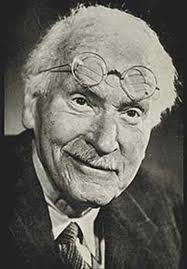
An Astonishing Mind: forever Jung

©

When it comes to religion, everyone has some kind of position. In the modern context both God and religion are dead, though the devoutly religious among us may deny it. Secular humanism has replaced religion as the moral ground for our actions, with science, reason and logic providing the framework for the understanding and application of our morality. Yet, with all the intellectual tools available to modern man, morality seems more than ever to be some kind of chimera, shifting and reshaping on a situational basis and managed by those in a position of advantage. In other words, our morality, like history, is being shaped by the winners.

The realization that morality has fallen into an instrumental, utilitarian, philosophical box and meted out at the whim of a power elite in the form of justice and human rights based on their current economic and social paradigms immediately brings to mind Jung—and his study of the dark side of human nature, what he called “the shadow.” In all cases, the shadow leads back to our understanding of god. Jung worked through his own view of the nature of man and god by observing his patients and their presentation of archetypical behaviour, and his study of alchemy and mandalas—all connections to ancient symbolism relating to the origins of—and the need for—a personal god, that is some force that is “extra-mundane” or above worldly influence and control. This may seem at odds with the current scientific or philosophic mindset. But before forming a judgment, let’s look at what Jung says.

“Modern psychological development leads to a much better understanding as to what man really consists of. The gods at first lived in superhuman power and beauty on the top of snow-clad mountains or in the darkness of caves, woods and seas. Later on they grew together into one god, and then that god became man. But in our day even the God-man seems to have descended from his throne and to be dissolving himself into the common man. That is probably why his seat is empty. Instead, the common man suffers from a hybris [hubris] of consciousness that borders on the pathological. This psychic condition in the individual corresponds by and large to the hypertrophy and totalitarian pretentions of the idealized State. In the same way that the State has caught the individual, the individual imagines that he has caught the psyche and holds her in the palm of his hand. He is even making a science of her in the absurd supposition that the intellect, which is but a part and function of the psyche, is sufficient to comprehend the much greater whole.”

Jung makes the observation that science is simply an offshoot of our consciousness, the tip of the iceberg of human psychic reality. In recognizing that, unlike the narrow confines of consciousness, the psyche is far larger, Jung identifies the psyche as archaic and primordial, an ancient, universal mind that encompasses all of our evolutionary developments and contains, along with the rational, the Great Terror and darkness that permeates the collective unconscious of all life. He explains:

“In reality, the psyche is the mother and the maker, the subject and even the possibility of consciousness itself. It reaches so far beyond the boundaries of consciousness that the latter could easily be compared to an island in the ocean. Whereas the island is small and narrow, the ocean is immensely wide and deep and contains a life infinitely surpassing, in kind and degree, anything known on the island—so that if it is a question of space it does not matter if the gods are “inside” or “outside.” It might be objected that there is no proof that consciousness is nothing more than an island in the ocean. Certainly it is impossible to prove this, since the known range of consciousness is confronted with the unknown extension of the unconscious, of which we only know that it exists and by the very fact of its existence exerts a limiting influence on consciousness and its freedom. Wherever unconsciousness reigns, there is bondage and possession.”

What Jung is telling us here, is that our consciousness is bounded and contained by the vast, unknowable unconscious, holding us captive within something we don’t understand or comprehend. He goes on…

“The immensity of the ocean is simply a comparison; it expresses in allegorical form the capacity of the unconscious to limit and threaten consciousness. Empirical psychology loved, until recently, to explain the “unconscious” as mere absence of consciousness—the term indicates as much—just as shadow is an absence of light. Today accurate observation of unconscious processes has recognized, with all other ages before us, that the unconscious possesses a creative autonomy such as a mere shadow could never be endowed with.”

So Jung sees the unconscious as a creative ocean and identifies with Carus, von Hartman, Schopenhauer and others who have equated the unconscious with the world-creating principle, in Jung’s words as “the mysterious agent personified as the gods.” God, then, is the personification of the mysterious world creation force. Jung explains:

“It suits our hypertrophied and hybristic [hubristic] modern consciousness not to be mindful of the dangerous autonomy of the unconscious and to treat it negatively as the absence of consciousness. The hypothesis of invisible gods or daemons would be, psychologically, a far more appropriate formulation, even though it would be an anthropomorphic projection.”

In other words, Jung is simply saying that having a god is a healthier psychological proposition than not having a god. But obviously there’s still that modern scientific problem…

“But since the development of consciousness requires the withdrawal of all projections we can lay our hands on, it is not possible to maintain any non-psychological doctrine about the gods. It the historical process of world despiritualization continues hitherto, then everything of a divine of daemonic character outside us must return to the psyche, to the inside of the unknown man, whence it apparently originated.”

So has Jung merely brought us full circle? Not really.

“The materialistic error was probably unavoidable at first. Since the throne of God could not be discovered among the galactic systems, the inference was that God had never existed. The second unavoidable error was psychologism: if God is anything, he must be an illusion derived from certain motives—from will to power, for instance, or from repressed sexuality. These arguments are not new. Much the same thing was said by the Christian missionaries who overthrew the idols of heathen gods. But whereas the early missionaries were conscious of serving a new God by combating the old ones, modern iconoclasts are unconscious of the one in whose name they are destroying old values.”

Jung now begins to address the modern worldview through Nietzsche’s eyes.

“Nietzsche thought himself quite conscious and responsible when he smashed the old tablets, yet he felt a peculiar need to back himself up with a revivified Zarathustra, a sort of alter ego, with whom he often identifies himself in his great tragedy Thus Spake Zarathustra. Nietzsche was no atheist, but his God was dead. The result of this demise was a split in himself, and he felt compelled to call the other self “Zarathustra” or, at times, “Dionysus.” In this fatal illness he signed his letters “Zagreus,” the dismembered god of the Thracians. The tragedy of Zarathustra is that, because his God died, Nietzsche himself became a god; and this happened because he was no atheist. He was of too positive a nature to tolerate the urban neurosis of atheism. It seems dangerous for such a man to assert that “God is dead”: he instantly becomes the victim of inflation.”

By inflation Jung means sublimating the non-personal aspects of the psyche, aspects of the vast ocean, as if these were acquired personally, thereby partially regressing into the unconscious resulting in a dissolution of the ego into its paired opposites such a good and evil—definitely a recognizable Nietzschean theme. This, then, begins man’s Promethean struggle without a god. Jung goes on…

“Far from being a negation, God is actually the strongest and most effective “position” the psyche can reach, in exactly the same sense in which Paul speaks of people “whose God is their belly.” The strongest and therefore most decisive factor in any individual psyche compels the same belief or fear, submission or devotion which a God would demand from man. Anything despotic and inescapable in this sense is “God,” and it becomes absolute unless, by an ethical decision freely chosen, one succeeds in building up against this natural phenomenon a positive that is equally strong and invincible.”

What Jung is telling us is that, whether we consciously agree to it or not, our psyche is hardwired to create a god of any natural force beyond our control. But, he points out, we have a choice. We can consciously choose a more powerful counterforce.

“If this psychic position proves to be absolutely effective, it surely deserves to be named a “God,” and what is more, a spiritual God, since it sprang from the freedom of ethical decision and therefore from the mind. Man is free to decide whether “God” shall be a “spirit” or a natural phenomenon like the craving of a morphine addict, and hence whether “God” shall act as a beneficent or a destructive force.

“However indubitable and clearly understandable their psychic events or decisions may be, they are very apt to lead people to the false, unpsychological conclusion that it rests with them to decide whether they will create a “God” for themselves or not. There is no question that, since each of us is equipped with a psychic disposition that limits our freedom in high degree and makes it practically illusory. Not only is “freedom of the will” an incalculable problem philosophically, it is also a misnomer in the practical sense, for we seldom find anybody who is not influenced and indeed dominated by desires, habits, impulses, prejudices, resentments, and by every conceivable kind of complex.”

So what is Jung telling us? That we need to have a god but can’t create a god (such as recasting ourselves as God)? That’s exactly what he’s saying. Jung tells us that it’s not a matter of creating, but a matter of being possessed—like our response to fear—which is something the psyche understands. Our gods are already created.

“Bondage and possession are synonymous. Always, therefore, there is something in the psyche that takes possession and limits or suppresses our moral freedom. In order to hide this undeniable but exceedingly unpleasant fact from ourselves and at the same time pay lip-service to freedom, we have become accustomed to saying apotropaically, “I have such and such a desire or habit or feeling of resentment,” instead of the more veracious, “Such and such a desire or habit or feeling of resentment has me.” The latter reformulation would certainly rob us even of the illusion of freedom. But I ask myself whether this would not be better in the end than fuddling ourselves with words. The truth is that we do not enjoy masterless freedom; we are continually threatened by psychic factors which, in the guise of “natural phenomena,” may take possession of us at any moment.”

And here is where Jung identifies the psychic need for God.

“The withdrawal of metaphysical projections leaves us almost defenceless in the face of this happening, for we immediately identify with every impulse instead of giving it the name of “the other,” which would at least hold it at arm’s length and prevent it from storming the citadel of the ego.”

And in modern terms, we do seem defenceless. Jung continues:

“‘Principalities and powers’ are always with us; we have no need to create them even if we could. It is merely incumbent on us to choose the master we wish to serve, so that his service shall be our safeguard against being mastered by the “other” whom we have not chosen. We do not create “God,” we choose him. So what are the characteristics of that choice?

“Though our choice characterizes and defines “God,” it is always man-made, and the definition it gives is therefore finite and imperfect. (Even the idea of perfection does not posit perfection.) The definition is an image, but this image does not raise the unknown fact it designates into the realm of intelligibility, otherwise we would be entitled to say we had created a God. The “master” we choose is not identical with the image we project of him in time and space. He goes on working as before, like an unknown quantity in the depths of the psyche. We do not even know the nature of the simplest thought, let alone the ultimate principles of the psyche. Also we have no control over its inner life. But because this inner life is intrinsically free and not subject to our will and intentions, it may easily happen that the living thing chosen and defined by us will drop out if its setting, the man-made image, even against our will. Then, perhaps, we could say with Nietzsche, ‘God is dead.’”

And then what? How do we handle this loss of faith?

“Yet it would be truer to say, “He has put off our image, and where shall we find him again?” The interregnum is full of danger, for the natural facts will raise their claim in the form of various –isms, which are productive of nothing but anarchy and destruction because inflation and man’s hybris between them have elected the ego, in all its ridiculous paltriness, lord of the universe. That was the case with Nietzsche, the uncomprehending portent of a whole epoch.”

Thus is Nietzsche and his conscious ego trap dispatched.

“The individual ego is much too small, its brain is much too feeble, to incorporate all the projections withdrawn from the world. Ego and brain burst asunder in the effort; the psychiatrist calls it schizophrenia. When Nietzsche said “God is dead,” he uttered a truth which is valid for the greater part of Europe. People were influenced by it, not because he said so, but because it stated a widespread psychological fact. The consequences were not long delayed: after a fog of –isms, the catastrophe [Hitler and the Second World War]. Nobody thought of drawing the slightest conclusions from Nietzsche’s pronouncement. Yet it has, for some ears, the same eerie sounds as that ancient cry which became the echoing over the sea to mark the end of the nature gods: “Great Pan is dead.”

And on that thought Jung points to the present destruction of the ecosystem itself, through the denial of our gods, those inner psychic forces that might reign in our impulses before it’s too late.

Jung possessed an astonishing mind—as do each of us—into which our gods are apparently extremely deeply rooted. What we choose to do with those gods remains to be seen.

Saturday, May 21, 2011

Note to self: it’s not about the pursuit of happiness

©

OK. We’ve killed Osama, elected a Conservative majority and gotten rid of the tolls on the Saint John bridge and Grand Manan ferry. The province is finally working on dispatching its the debt, and the local county is getting a brand new economic development strategy. So there’s nothing left to bitch about because we’re finally living in a nearly perfect world. The rest, as they say, is up to us.

So, what to do? Well, we could look to our American neighbours, who seem to have all the answers. It’s the pursuit of happiness, they’d say. Cool, we can handle that.

If that’s the goal, then how do we get there? That depends. For some, being rich is almost equivalent to happiness. Money can’t buy you love, but as someone once said, “I’ve been poor and I’ve been rich, and being rich is a whole lot better.” Yep. More marriages implode on money issues for example.

But now, instead of Gross Domestic Product, we’re looking at Gross Domestic Happiness—measuring our emotional wealth rather than our industrial output.


Excuse me for sounding cynical but that seems like a notion cooked up by the rich to keep the suckers at the bottom satisfied with less. After all, we don’t see the rich giving away their fortunes to go back to the land in the middle of blackfly season.

So it follows that happiness is connected to the pursuit of money, the basis of the entire capitalist system. Ergo, capitalism is the pursuit of happiness, right?

Well kind of. Capitalism is a philosophy. And it’s a pretty powerful philosophy given it has pretty much displaced other “isms” such as communism and socialism. When Ronald Reagan famously declared, “Mr. Gorbachev tear down this wall,” he de facto invited Gorbachev to join the capitalist world. For those who are still connecting dots, it wasn’t about democracy.

When Boris Yeltsin took over the Soviet Union in the early 1990s he began dismantling the communist system, privatizing the publicly-owned corporations, and creating a market economy—which conveniently allowed many of his associates to become incredibly wealthy. So instead of becoming democracies, the former Soviet states became oligarchies.

Coincidentally, the same thing has been happening here since Reagan. Our governments have been infiltrated by lobby groups, wealthy individuals and corporate boards to the point that nothing can get done without their blessing and financial support, including the nomination and financing of business-friendly candidates. And the redistribution of wealth from the bottom to the top income levels in North America over the past 30 years tells the tale.

It wouldn’t be a stretch to conclude that we’re now well along the migration path from democracy to oligarchy. Wealthy individuals are now actively and publicly involved in reshaping government policy—which at first glance may seem altruistic, but on further examination only shows the elite exerting even greater influence over the rest of us with the inevitable prioritization of their personal goals over the collective aims of the general public. So we’re on the slippery slope.

Of course all of this is Osterized into the political debate between the left and the right. But the actual arguments on each side can shift quite dramatically, as on the issue of climate change. Somehow the debate has shifted from the environment to the quality of climate change science. Conveniently, the actual environmental facts can be tossed to the wind.

But conveniently for whom?

Last night I sat down and watched “Who Killed the Electric Car?” with my 12-year-old. It was interesting to watch his reaction to the games played by General Motors and the oil companies to keep the electric cars off the road. He was astounded. “How could they do that?” he kept asking—like when Shell Oil bought up the patents on the new and highly successful NiHM battery technology—to bury it. A 12-year-old could see that the corporations were working hard to kill environmental innovation, in this case the electric car, in order to maintain high profits and a business-as-usual investment model.

A few of my blogging buddies in the US are engaged in a lively ongoing debate about business and the widening rift between the right and left. They have a long list of culprits to blame. Bringing the two sides together seems increasingly impossible. Nobody seems to agree on a common direction. So what would make all sides happy?

Incredibly, the answer that came to me was “suffering.” The only way to bring everyone together in a cooperative way is to focus on the job of relieving suffering in society. Sure, it’s a radical notion. But think about the possibilities.

Think of all the types of suffering—emotional, physical, financial, spiritual, environmental—and how that suffering affects each of us. It’s not a stretch to see that if we just worked on reducing suffering we’d all be a lot more engaged—and a lot happier.

And in fact we’re collectively suffering from a mainline addiction to overconsumption—when we’re really craving more purposeful lives. Isn’t it time we removed the happiness needle and faced the disease?

Monday, May 16, 2011

Mass psychosis or just developmentally handicapped?

©

Apparently, the world’s cheapest car (at just $2200!) is a dud. As of January it wasn’t selling well, not even in India where it’s being built. Which is a puzzle, since you’d think more of India’s budding middle class would want something affordable to get them out of the rain.

It’s not that the Tata Nano is a bad car, though it is tiny and pod-like and has predictably few safety features. It’s actually a cute little smart-tech machine, designed in Italy and manufactured by Tata, a world-class manufacturer that also makes Jaguar and Land Rover. So what’s really going on?

Two things, really. First, competition at the lowest price point in India is pretty fierce. Both General Motors and Suzuki are battling it out for leadership of the second-lowest price point in the market, the $4000 to $5000 range, and they’re marketing aggressively. Second, their marketing works—especially at knocking the Nano. Both GM and Suzuki have managed to position the Nano as an anti-status item for losers. Indians, like the rest of us, are easily lured by upscale products.

Naturally, the negative marketing woke up the giant, and Tata is finally retaliating with some strong marketing of its own, and as of today, sales are up to 10,000 units a month. There’s also been buzz about Tata upgrading the Nano to hit the European and American markets in the $6000 price range.

Meanwhile here on the home front gas prices climbed to $1.34 a liter before dropping a bit a couple of days ago. So gas is on my mind, especially as we consider replacing one of our vehicles. But what to buy? We need a family vehicle with lots of seats, so that rules out the Nano class, for sure, which limits the choices to a minivan, an SUV or a four-door pickup truck.

I’ve watched a couple of neighbours go through the same process recently, and both have gone the big pickup truck route. I’ve done that number, too, and it feels great to be the King of the Road sitting up high with a big V8 underfoot. And the price is right, too. You can buy a good late model truck for under $20,000 and with the difference between that and a brand new $60,000 SUV, you can buy a whole lot of gasoline. Plus there’s a kind of reverse status to the pickup—a tougher image—like what owning a Harley used to deliver.

But there it is again: the status thing. Whether in India or China or Canada, status trumps fuel economy every time. And the car companies know it. That’s why, as their engines have become much more efficient over the past 20 years, the new units have gone into ever larger vehicles, which effectively wiped out most of the fuel savings we might have gained.

Let’s face it. The biggest price we pay for a vehicle is the status factor. If we (or a smart ad agency) could change how we view status, we’d all be jumping into cheap Nano-like gas misers next week.

The second biggest price we pay for a vehicle is poking a hole in the air. Car companies know this, too, and routinely ignore it. But almost all the energy in a liter of gasoline (and the 2.2 kilograms of carbon it produces) goes into opening that hole in the wall of air—especially as we drive faster into the wall. This is the reason trains are more economical to operate per tonne than transport trucks. With just one engine a train manages to very efficiently pull 100+ railcars through a single hole in the air.

So why haven’t we applied that thinking to cars? For example, why don’t we “train” or chain cars together electronically for long highway commutes? Or why don’t we have stretched minicars instead of huge trucks and SUVs? And why aren’t we legislating the exclusive use hybrids and electrics?

Why? Because we’re missing the point. We’ve been trained (and sold) to see things from a purely personal view. But resource depletion is not a personal issue. It’s a collective problem. As a global population, we’re gobbling up more than 80 million barrels of oil a day to keep our economy going, and that’s a real concern, especially since we’re running out of the stuff. And that doesn’t even touch on the 1.5 million tonnes of CO2 we’re pumping out every day.

So, what to do? What to buy? It’s a conundrum. The real answer is, we have to begin acting collectively…and that means government. By regulating the use of tobacco products we’ve managed to make smoking socially inappropriate. Why not do the same with our transportation? We have the responsibility to regulate the kinds of vehicles we allow on our public roads and the volume of emissions we will allow into our ecosphere.

Where we clearly fail is in electing more forward-thinking politicians and not putting more pressure on them after they’re elected. We need to do better.

As for me, I’m confident enough in my manhood. I think it would be cool to drive a stretched Nano or a Prius. How about you?

Monday, May 9, 2011

The importance of head starts and why

©

My good friend from Alberta sent me a link to a website. It showcased a guy we knew years ago. He’d been born with a bit of a silver spoon in his mouth, and he’d done well, now living in Paris and making a career for himself as an artist (which I admit is not such an easy thing to do).

My friend, on the other hand, wasn’t born with the proverbial silver spoon, but she’s done OK. She made the best of her talent, earned a Ph.D. and carved out a nice life for herself. Sure, she had some head-start advantages (her mom was a teacher) but she worked hard and moved herself up the ladder.

Closer to home, I know a few kids who don’t have any kind of a head start at all. These kids are on the negative side of the balance sheet: they started out in poverty, were raised in broken homes by relatives instead of parents, kept failing at school before finally dropping out, falling into substance abuse, violence, petty crime, teen pregnancies and all the rest. As an added bonus, our system seems only too eager to punish these already lost kids.

So, the obvious question is: how do we equalize things to give the kids at the bottom more of a head start—or at least level the playing field?

Well, the real life answer is we likely won’t. Our economic system has been re-jigged since the 1980s to increase the advantages of those at the top, not at the bottom. And the stats show it. The wealthiest .01 percent of society has been getting increasingly wealthy as the less prosperous bottom 50 percent is getting relatively poorer.

For those of us who grew up before the 1980s, the accident of birth didn’t pose the problem it does to today’s kids. We grew up in a rapidly growing economy. There were always better jobs just around the corner. But not today. The expectation of doing better than one’s parents is no longer the norm. Increasingly, your kids will be lucky to remain at the level into which they were born.

What’s changed? Well, governments became more corporate-friendly as the world’s economy globalized. They lowered taxes, deregulated legal constraints and gave tax breaks and incentives to corporations to keep them from relocating elsewhere. It was a political reaction to a particularly insidious kind of corporate blackmail—resulting in the creation of a corporate welfare state. The recent bailout of the financial industry in the U.S. after the housing bubble collapsed (rather than bailing out the victimized homeowners) is simply another blatant example of how the system is squarely aimed at saving (and enriching) those at the top first.

How is this different from the past? Well, once upon a time a long ago, corporations took a similar path. They formed monopolies (like Rockefeller’s Standard Oil), manipulated the markets, rigged the system, paid off politicians and generally took the public on a wildly unregulated investment ride—until the wheels came off and the whole top-heavy finance machine crashed in 1929. During the ensuing Great Depression, governments took up the slack, created public works projects to put people back to work, re-regulated business, increased tax levels on the wealthy, broke up the monopolies and created the modern social services safety net, which, by the 1960s had been universally adopted by most of the world’s leading industrial societies. And then mass amnesia began setting in. Slowly and surely, the wealthy began their assault on the elegantly re-engineered public social welfare system.

Of course, as always, it’s all about money. But what is money? Money in our economic system is like oxygen in the water. It always bubbles to the top. And all of life in the ocean requires oxygen. So what happens to life at the bottom if all the oxygen is driven to the top? It dies, of course.

So if follows that the main purpose of government is to protect all of its citizens, especially those of us who, through no fault of our own, are nearer the bottom. Therefore, one of the key duties of a fully functioning government is to reoxygenate the water—to collect some of the money that has risen to the top and push it back down to the people at the bottom.

This is done by increasing taxes on the very affluent, including the imposition of death taxes on wealthy estates, and penalizing individuals and corporations that shelter their wealth offshore. It also includes raising taxes on large corporations and ensuring rights and protection for workers, including the right to unionize, collectively bargain and strike.

And how would we redistribute that money to level the field for our kids? Well, we might establish a guaranteed annual income for their parents, which is not as far-fetched as it might seem. We might seriously reassess how we deliver education to low-income kids, and while we’re at it, extend free public education to the post-secondary diploma-degree level as soon as possible.

How we offset early disadvantages merits our concern. After all, if we won’t reinvest in our people equitably, what does it say about us as a society?

Monday, May 2, 2011

Meditating on media on May Day

©

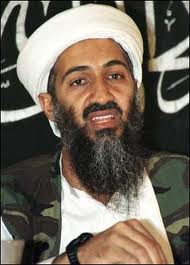
It’s May 1 as I write this, May Day, historic day of celebration. Sixty-six years ago Adolf Hitler committed suicide, while today Osama bin Laden was killed by a team of U.S. Navy SEALs in Pakistan. And this weekend a small political sewage truck finally unloaded on the Canadian electorate.

For me, tomorrow is voting day but by the time you read this it will all be over. I expect things will have changed on the political landscape, due in part to Jack Layton’s dramatic rise in popularity—which triggered that nasty media dump of fecal matter.

Yes, an anonymous retired Toronto cop leaked the story to Sun Media that Layton was caught in an illegal massage parlour way back in 1996. He wasn’t arrested. But you get the damning innuendo. What was he really doing there?

Now we hear there’ll be Ontario Provincial Police investigation into the leak and why the cop still had his old notebook, which is the property of the Toronto police force.

Meanwhile, those who oppose Layton and his NDP have been busy trolling Facebook pages in an effort to smear Layton’s reputation one day before the election. It even woke up the Alberta Outdoorsman blog, of all places. A character named “hillbillyreefer” whose tagline reads, “I bet vegans are delicious; the grass fed little buggers,” blames the Liberals for leaking the story.

But the Liberals had their chance to air the dirty laundry years ago—when it was offered to them—and decided not to. They thought the story would do more damage to them than to Layton. No, it isn’t about which political party may have been behind the leak. The telling bit is the media source: Sun Media.

As I wrote a few months ago, Sun is a part of publishing giant Quebecor owned by Pierre Péladeau. And it was Péladeau who hired former Harper staffer, Kory Teneycke, to help induce the Harper government to grant Sun TV a Category 1 broadcast licence to put Sun on every cable carrier in the country—just like CBC (because there’s big money in that). Unfortunately for Pierre, neither the public nor the CRTC went for the deal. But Tenecyke is still big news at Sun TV and a big Harper supporter.

Coincidentally, just as Jack’s NDP team started to seriously threaten Harper’s hope for a majority, the Sun pulled the plug on the bottom of the sewage truck.

But the killing of Osama bin Laden was no coincidence. Clearly, that was a well-laid plan. I watched the Obama late night speech, and looked up some of the online background story before going to bed. Apparently, the event wasn’t so clear-cut. One report claims that one of the four U.S. helicopters was hit by a rocket grenade. A contradictory report claims that the helicopter suffered a “mechanical malfunction”. An early report also stated there was no DNA proof taken, only a “facial recognition” ID, and that the body was taken to a U.S. ship and then quickly buried at sea, in accordance with Islamic tradition. Huh?

Given that the U.S. has spent billions if not trillions of dollars on two wars in the Middle East triggered by Osama bin Laden, wouldn’t you think the American public deserves more due diligence with respect to the identification and handling of the body of its greatest enemy? You’d think.

So what’s going on here? And what has the Jack Layton massage story have to do with the Osama bin Laden killing? Well, both stories are about shaping public opinion through the media, while keeping us in the dark as to actual events. The Jack Layton scandal is being used to discredit his ethical approach to women’s rights and politics. The Osama story is a bit of political theatre, though while real, masks broader intentions in the Middle East and the political-economic conditions in the U.S. which are affecting the popularity of Barack Obama and his upcoming run for a second term. With bin Laden put to rest by order of the president, Obama becomes the decisive military commander Americans need in their next election.

But these attempts to shape public opinion never quite work out as intended. The people of the Middle East are now certain to coalesce around their slain hero—who will now become a mythic figure, and impossible to erase. And the Sun’s bit of last-minute yellow journalism will likely have polarized the undecided vote (those of whom who’ve followed the story) and nudged more support toward the NDP.

Fortunately, the majority of the general public is not naïve enough to swallow everything it’s fed, and has a better set of crap detectors than those who seek to control us would like.

Still, it would be nice to have a reliable media source to which we could turn and trust, one not owned by private or political interests.

But here in Canada we already have that. It’s the same CBC–Radio Canada that some Harperists would like to see cut back or dismantled. Given the sorry state of media south of the border and some of the private media up here, I’d say that would be a big mistake.